

Welcome to the AP Lab!

Lab Culture
In the AP Lab, we believe that creating an atmosphere that is inclusive of socioeconomic status, sexual orientation, gender, religion, and ethnicity brings a variety of opinions to the table and in turn generates better, more creative science. More diverse voices ensure that the scientific and technological advancements we work on can profit all members of society.  We strive to ensure that the composition of the AP Lab and the collaborations we foster reflect the diversity that exists in our society. We aim to create a culture of equality that we believe makes our lab stronger, more innovative and better placed to solve problems that will benefit society as a whole and not specific individuals.

Research
In the AP Lab we work on developing methods to enhance perception of computer generated images. Novel visualization techniques, display devices and interaction paradigms are explored to enrich the users experience in specific scenarios and workflows. Current research topics include:

  • Augmented reality visualization
  • Enhancing depth perception of computer generated images
  • Interaction techniques for better understanding of rendered images
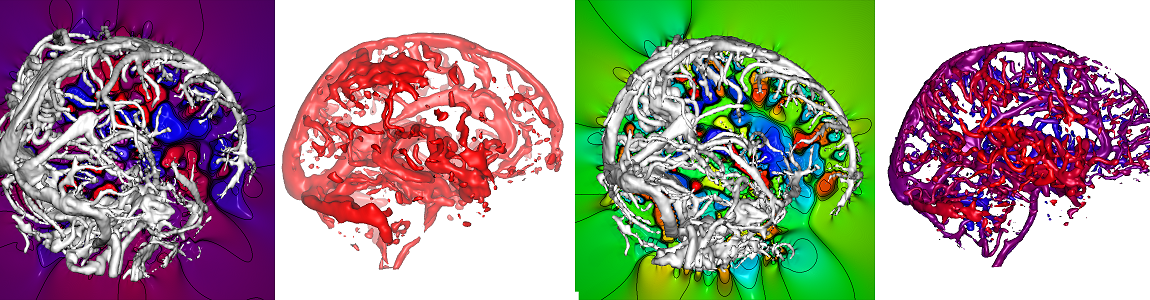
  • Medical image processing and visualization
  • Auditory displays and data signification
  • Gaze-based interaction and eye-tracking
  • Study of push notifications on exercise motivation
  • Gamification for studying different visualization techniques
  • Federated and machine learning in medical imaging

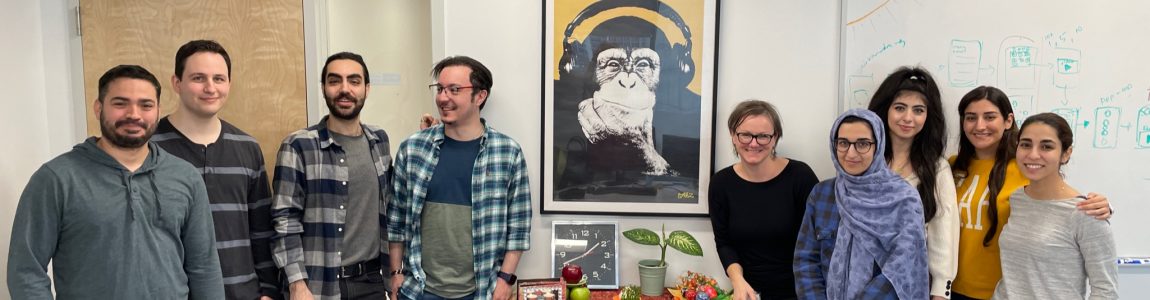
The lab is headed by Dr. Kersten-Oertel.

Recent Publications

Device-Constrained Real-Time EVD Catheter Segmentation

M Seddiqi, J Castillo, T Popa, M Kersten-Oertel International Conference on Medical Image Computing and Computer-Assisted …, 2026

Ventriculostomy, or external ventricular drain (EVD) placement, is frequently performed freehand in urgent bedside settings, resulting in high catheter misplacement rates. Portable augmented reality (AR) guidance offers a low-cost alternative to conventional navigation systems, but mobile and standalone XR hardware impose strict latency, memory, and power constraints. A key enabling component is reliable real-time segmentation...

2026

Data-driven registration and modeling of brain deformation for image-guided neurosurgery: A systematic review

T Assis, CP Galvin, JP Castillo, N Haouchine, M Kersten-Oertel, Z Gao, ... Medical Image Analysis, 104217, 2026

Accurate compensation of brain deformation is critical for reliable image-guided neurosurgery. Surgical manipulation and tumor resection induce tissue motion, causing preoperative planning images to become misaligned with the intraoperative anatomy. In this systematic review, we examine data-driven methods developed between 2020 and 2025 for brain deformation registration and modeling, with a particular focus on learning-based...

2026

VIVIE: Virtually Integrated Ventricular Intervention Environment and its effectiveness as a teaching and learning tool

PL O’Connor, K Mccombe, S De Ribaupierre, R Eagleson, ... International Journal of Computer Assisted Radiology and Surgery, 1-9, 2026

PurposeExternal ventricular drain (EVD) placement is a fundamental neurosurgical procedure for monitoring and relieving elevated intracranial pressure, yet catheter misplacement remains common, particularly during early training. Virtual reality (VR) simulation offers a scalable approach for procedural education. We present VIVIE, a standalone VR-based training system designed to support safe, repeatable practice of EVD placement.MethodsVIVIE simulates...

2026